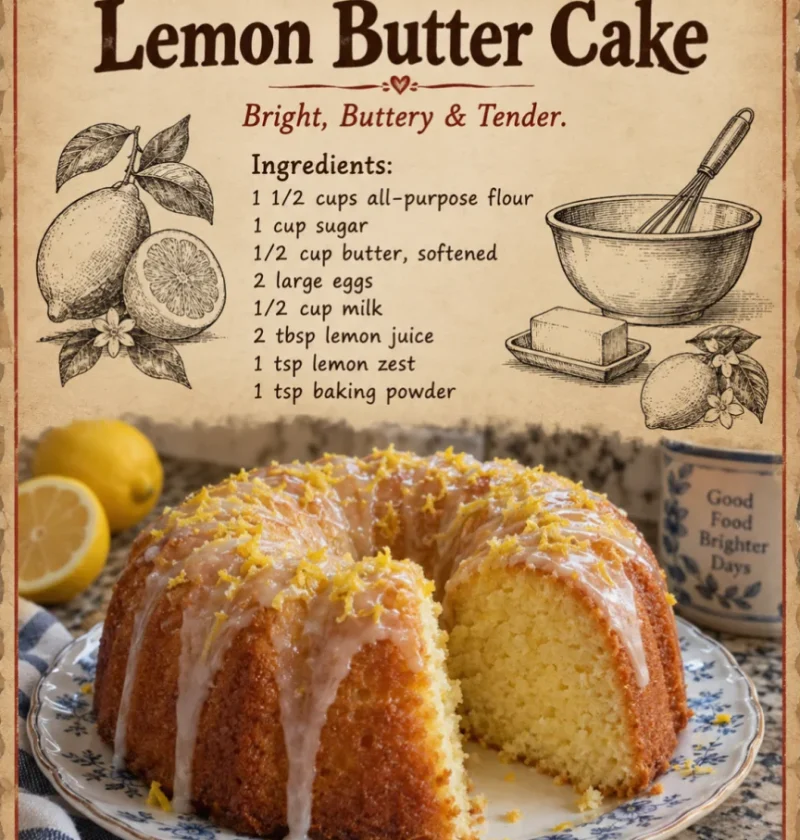
There’s something truly magical about a Lemon Butter Cake that makes it a standout dessert for any occasion. This delightful treat combines the tangy zest of fresh lemons with the rich, buttery flavor that many of us adore. Whether you’re hosting a tea party or celebrating a special occasion, this cake promises to be a crowd-pleaser. Its light and airy texture, paired with a luscious Cream Cheese Frosting, creates a balance of sweet and tangy flavors that will tantalize your taste buds. This recipe takes inspiration from classic baking traditions, ensuring that every bite reflects the joy of homemade baking. Not only is this cake delicious, but it also evokes memories of sunny days and family gatherings, making it a cherished recipe to pass down through generations. The Lemon Butter Cake is truly more than just a dessert; it’s a slice of joy that brings people together, creating lasting memories. This cake is perfect for any occasion, and its bright flavor profile is sure to elevate your dessert table.
Ingredients
To create a sensational Lemon Butter Cake, gather the following ingredients:
For the Cake:
- 2 ½ cups all-purpose flour
- 1 tablespoon baking powder
- ½ teaspoon salt
- 1 cup unsalted butter, softened
- 2 cups granulated sugar
- 4 large eggs
- 1 tablespoon lemon zest, freshly grated (about 2 medium lemons)
- ½ cup fresh lemon juice (about 3-4 lemons)
- 1 teaspoon vanilla extract
- 1 cup buttermilk, at room temperature
For the Frosting:
- 8 ounces cream cheese, softened
- ½ cup unsalted butter, softened
- 4 cups powdered sugar
- 2 tablespoons fresh lemon juice
- 1 teaspoon vanilla extract
- Additional lemon zest for garnish (optional)
Note: For the best flavor, use fresh lemons for zest and juice. Freshly squeezed lemon juice will impart a brightness and complexity that bottled juice simply cannot match. If you need substitutions, you can use a dairy-free butter and vegan cream cheese for a dairy-free version. Check out our related guide for more tips on baking with alternatives. Additionally, consider using organic lemons for a more vibrant flavor. Organic lemons not only taste better but are also free from pesticides, making them a healthier option. The quality of your ingredients plays a significant role in the final product, so choose the best you can find for a truly impressive Lemon Butter Cake.
Steps / Instructions
- Preheat your oven: Begin by preheating your oven to 350°F (175°C). This ensures that your Lemon Butter Cake will bake evenly. Grease and flour two 9-inch round cake pans, or line them with parchment paper for easy removal. If using parchment paper, make sure to cut it to fit the bottom of the pans perfectly. This will prevent the cakes from sticking and make serving much easier. Remember, an adequately preheated oven is crucial to achieving that perfect rise in your cakes.
- Mix dry ingredients: In a medium bowl, whisk together the flour, baking powder, and salt. Make sure to break up any lumps in the flour so that your cake has a uniform texture. Set this mixture aside to allow the baking powder to combine evenly with the flour. This step is crucial as it helps to activate the baking powder once mixed with the wet ingredients. A thorough mix of these dry ingredients ensures that your cake will rise properly and have a tender crumb.
- Cream butter and sugar: In a large mixing bowl, cream the softened butter and granulated sugar together using an electric mixer. Beat on medium speed until the mixture is light and fluffy, which should take about 3-5 minutes. The mixture should turn a pale yellow and increase in volume, indicating that enough air has been incorporated. This step is vital for creating a light texture in your cake. Proper creaming will result in a cake that is airy and moist, a hallmark of a well-made Lemon Butter Cake.
- Add eggs and flavorings: Add the eggs, one at a time, mixing well after each addition. This helps to emulsify the mixture and provides a better texture. Then incorporate the lemon zest, lemon juice, and vanilla extract into the mixture until fully combined, ensuring that the sweet and tangy flavors meld beautifully. The fresh lemon zest adds a wonderful aroma that elevates the overall experience. The eggs should be at room temperature to facilitate even mixing and to achieve a better rise during baking.
- Combine mixtures: Gradually add the dry ingredients to the butter mixture alternating with the buttermilk, starting and ending with the dry ingredients. This technique prevents the batter from becoming too heavy. Mix gently until just combined; be careful not to overmix, as this can lead to a tough cake. You want to maintain the lightness of the batter, which is key to a fluffy cake. Take your time with this step; a light hand will ensure that your Lemon Butter Cake has a delicate crumb.
- Pour into pans: Divide the batter evenly between the prepared cake pans. Use a spatula to smooth the tops and ensure an even layer, which helps with even baking. Tap the pans lightly on the counter to release any air bubbles trapped in the batter. This simple step can make a significant difference in the final texture of your cake. The batter should be spread uniformly to avoid uneven rising, which can lead to unbalanced layers.
- Bake the cakes: Bake in the preheated oven for about 25-30 minutes or until a toothpick inserted into the center comes out clean and the edges are lightly golden. Keep an eye on the cakes towards the end of the baking time; every oven is different, and slight variations may occur. It’s best to check for doneness a minute or two before the timer goes off. If the tops begin to brown too quickly, consider covering them with a piece of aluminum foil to prevent burning.
- Cool the cakes: Once baked, allow the cakes to cool in the pans for 10 minutes, then carefully transfer them to a wire rack to cool completely. Cooling in the pans helps the cakes to set while transferring to a wire rack allows air to circulate, preventing them from becoming soggy. Patience is key here; letting them cool completely will result in a better-frosted cake. If you’re in a hurry, you can place the cakes in the refrigerator to speed up the cooling process, but ensure they are not still warm when frosting.
- Prepare the frosting: While the cakes cool, prepare the frosting by beating together the softened cream cheese and butter until smooth. This should take about 2-3 minutes. Gradually add the powdered sugar, lemon juice, and vanilla extract, mixing until light and fluffy. The frosting should be spreadable yet thick enough to hold its shape. Taste as you go; feel free to adjust the sweetness or tartness to suit your preference. For a more intense lemon flavor, add a little more lemon juice or zest until it tastes just right.
- Frost the cake: Once the cakes have cooled, place one layer on a serving plate and spread a generous amount of frosting on top. Use an offset spatula for a clean finish. Place the second layer on top and frost the top and sides of the cake. Garnish with additional lemon zest if desired, which adds a pop of color and extra flavor. A sprinkle of zest can visually enhance the presentation and provide an inviting aroma. For an added decorative touch, consider using fresh berries or edible flowers along with the zest.
Tips & Tricks
To ensure your Lemon Butter Cake turns out perfectly every time, consider the following tips:
- Room temperature ingredients: Ensure your butter, eggs, and buttermilk are at room temperature for better mixing and texture. This helps in achieving a smooth batter that rises beautifully. Ingredients that are at room temperature integrate more easily, leading to a more consistent batter. If you’re forgetting to set out your ingredients, a quick tip is to place eggs in warm water for a few minutes to bring them up to temperature.
- Don’t overmix: When combining the wet and dry ingredients, mix just until combined to avoid a dense cake. If you notice any flour streaks, gently fold them in rather than mixing vigorously. Overmixing can activate the gluten in the flour, leading to a tougher cake instead of the desired light texture. The goal is to keep the batter airy and fluffy, which is essential for the perfect Lemon Butter Cake.
- Storage: Store leftover cake in an airtight container at room temperature for up to 3 days, or refrigerate for up to a week. The cake can also be frozen for up to 3 months; just wrap it tightly in plastic wrap and aluminum foil to prevent freezer burn. Thaw overnight in the refrigerator when ready to enjoy. This makes it a fantastic make-ahead dessert! You can also slice it before freezing, allowing you to enjoy just a piece at a time.
- Make ahead: You can bake the cakes a day in advance and frost them just before serving for added convenience. This can help with time management, especially when preparing for gatherings. The flavors of the cake can even deepen overnight, making it taste even better the next day! If you do bake in advance, store the un-frosted layers with parchment paper between them to prevent sticking.
- Common mistakes: Avoid opening the oven door too early while baking, as this can cause the cake to sink in the middle. Wait until the minimum baking time has passed to check for doneness; it’s also useful to rotate the pans halfway through baking for even cooking. An oven thermometer can be handy to ensure your oven is at the right temperature for baking. This attention to detail will help you achieve the perfect Lemon Butter Cake every time.
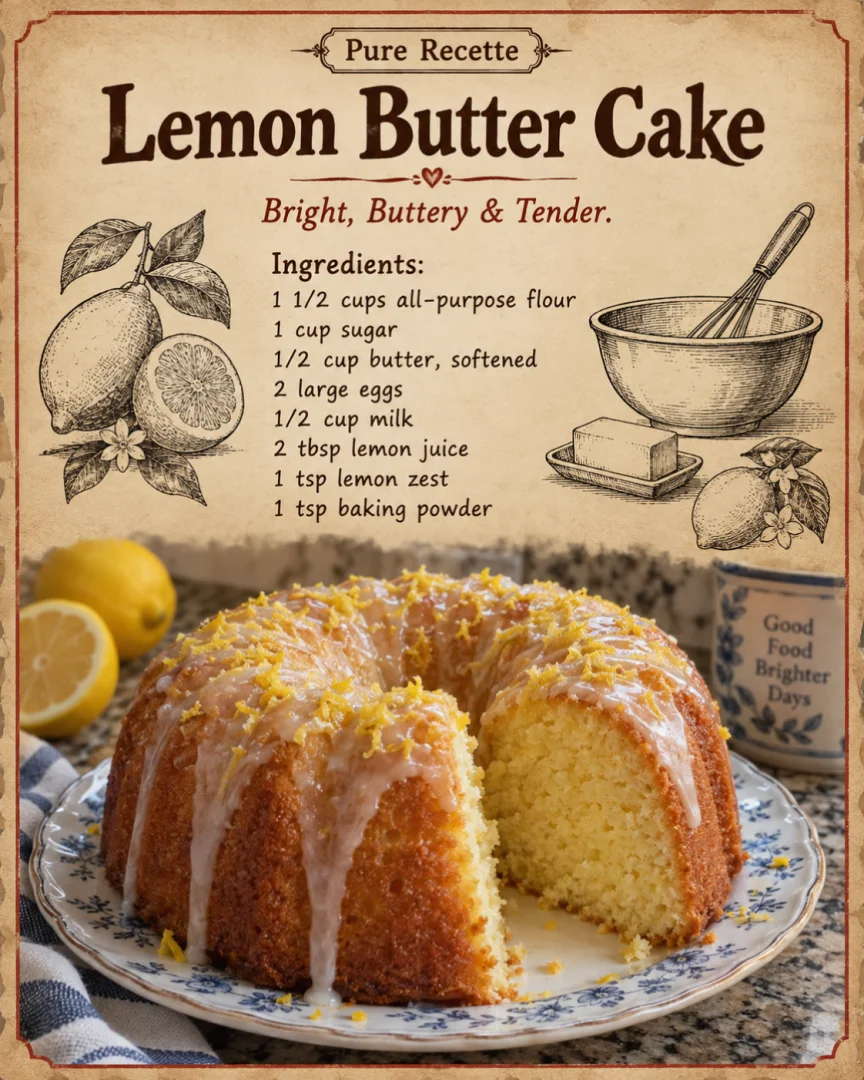
Lemon Butter Cake
A standout dessert combining the tangy zest of fresh lemons with a rich, buttery flavor, perfect for any occasion.
Ingredients
- 2 ½ cups all-purpose flour
- 1 tablespoon baking powder
- ½ teaspoon salt
- 1 cup unsalted butter, softened
- 2 cups granulated sugar
- 4 large eggs
- 1 tablespoon lemon zest, freshly grated (about 2 medium lemons)
- ½ cup fresh lemon juice (about 3-4 lemons)
- 1 teaspoon vanilla extract
- 1 cup buttermilk, at room temperature
- 8 ounces cream cheese, softened
- ½ cup unsalted butter, softened
- 4 cups powdered sugar
- 2 tablespoons fresh lemon juice
- 1 teaspoon vanilla extract
- Additional lemon zest for garnish (optional)
Directions
Preheat your oven to 350°F (175°C). Grease and flour two 9-inch round cake pans.
In a medium bowl, whisk together the flour, baking powder, and salt.
In a large mixing bowl, cream the softened butter and granulated sugar together using an electric mixer until light and fluffy.
Add the eggs, one at a time, mixing well after each addition. Incorporate the lemon zest, lemon juice, and vanilla extract.
Gradually add the dry ingredients to the butter mixture alternating with the buttermilk, starting and ending with the dry ingredients. Mix gently until just combined.
Divide the batter evenly between the prepared cake pans and smooth the tops.
Bake in the preheated oven for about 25-30 minutes or until a toothpick inserted into the center comes out clean.
Allow the cakes to cool in the pans for 10 minutes, then transfer them to a wire rack to cool completely.
Prepare the frosting by beating together the softened cream cheese and butter until smooth. Gradually add the powdered sugar, lemon juice, and vanilla extract, mixing until light and fluffy.
Once the cakes have cooled, spread a layer of frosting on the top of one cake layer. Place the second layer on top and frost the top and sides of the cake. Garnish with additional lemon zest if desired.
Nutrition Facts
Recipe Reviews
- ★★★★★
Excellent recipe!
Leave a Reply
Your email address will not be published. Required fields are marked *